
 IT
IT 日本
日本 DE
DE FR
FR 中文
中文 ES
ESCorte Sgarzarie
[an error occurred while processing this directive]Corte Sgarzarie (often also called Corte Sgarzerie) is a small square in the center of Verona where, in the Middle Ages, some processing, quality control and wool trading took place. The square is almost entirely occupied by the Mangano's loggia, an elevated structure on a colonnade that creates a suggestive covered space.
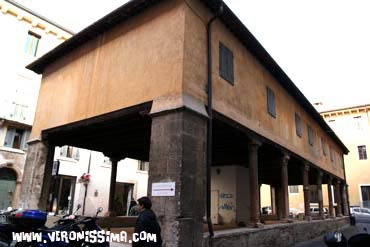
Corte Sgarzarie is close to the very central piazza delle Erbe and can be a short but fascinating digression on the route that from porta Borsari leads to the heart of Verona. Corte Sgarzarie also provides access to one of Verona's underground archaeological sites: the criptoportico del capitolium romano.
Oncoming Tours
August 3rd - 9:30pm
Verona by Night
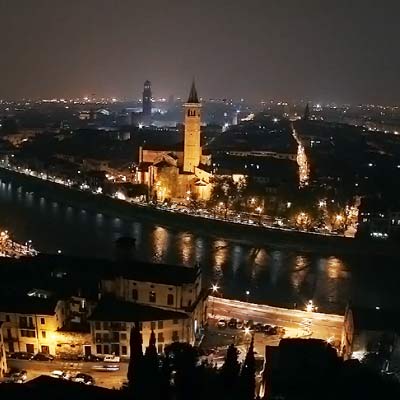
Discover the city away from the heat and crowds.
📍 Bra square
€30 per person
August 7th - 10:00am
Underground Tour
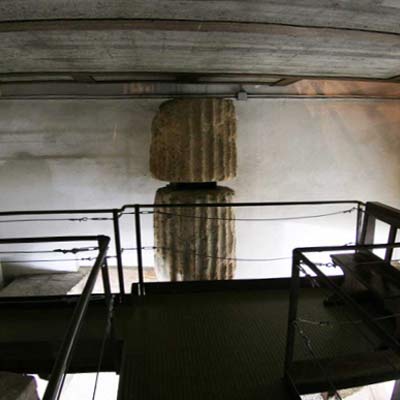
Discover the archaeological finds underneath Verona.
📍 Bra square
€30 per person
August 9th - 15:00pm
Romeo & Juliet's Tour

The unbelievable truth behind the famous love story.
📍 Erbe square
€30 per person
Info and Bookings:
+39 333 2199 645 info@veronissima.com P.I. 03616420232 C.F. CPPMHL74L13L781C
Verona and the Wool
In the Middle Ages, the processing and trade of wool was one of the main economic activities. The woolen cloth produced in Verona was particularly appreciated for its fineness and quality, able to compete with that of Florence and exported throughout Italy and to many countries in Europe.
The Scala family, which came to power in the mid-1300s, did much to encourage this sector.
The Scaligeri family, which came to power in the mid-1300s, did much to promote this sector. The Scaligeri did not have noble origins and came from the artisan and commercial bourgeoisie that had gradually gained political power along with economic power. They were therefore well aware of the importance of commercial activities for the prosperity of the city.
Towards the end of the 13th century, Alberto della Scala regulated the production of woollen cloth with the aim of guaranteeing a high level of quality. Everyone involved in the processing and marketing of wool had to be a member of the corporation of lanaiuoli, which established rules and standards for the production processes, set quality standards and established minimum selling prices.
Corte Sgarzarie
The place where all these operations of weighing, quality analysis and marking of the wool in the various phases of the production process were carried out was established in a small square not far from Piazza delle Erbe, the main market place in Verona. This space took the name corte Sgarzarie, from the Veronese dialect word sgarzar that indicates the carding of wool.
The Loggia
At the center of the square, a loggia was erected to cover the space used for the market, protecting the wool from the rain on bad weather days. The area is delimited by a balustrade, surmounted by columns that support the elevated environment of the loggia inside which some of the wool processing took place. The whole is elegant and harmonious and creates a very suggestive space.
The covered area of the loggia is occupied by the tables of some bars and restaurants that overlook Corte Sgarzarie.
Corte Sgarzarie Archaeological Area
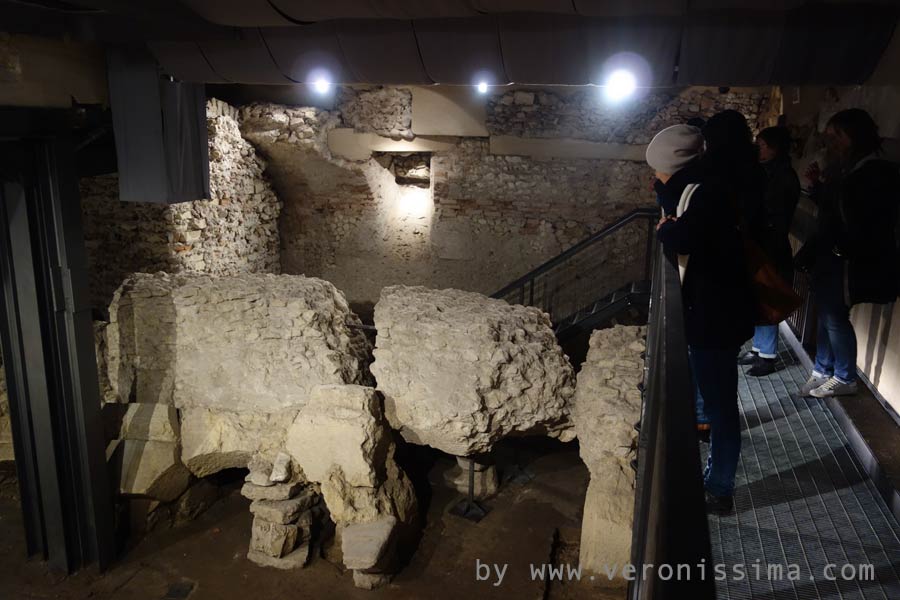
Corte Sgarzerie is located above a portion of the Capitolium, the Roman temple that stood on one side of the foro, the square at the center of the Roman Verona today corresponding to piazza Erbe.
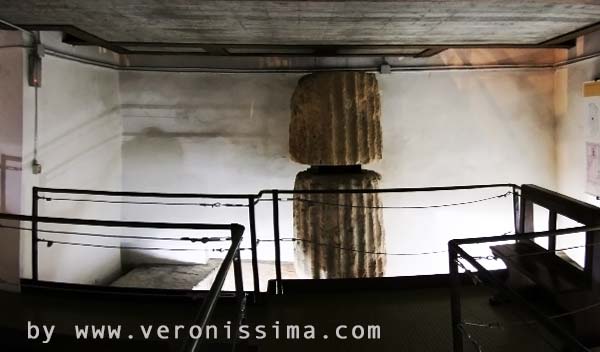
An archaeological excavation continued for years has brought to light part of the ancient structures. In particular, a portion of the criptoporticus, a long underground corridor that ran along the large platform on which the actual temple stood, has emerged. In addition to part of the pillars and the collapsed vault, the excavations also uncovered a Roman pedestrian street and some early medieval structures such as a tower and an ice-house. The underground area is accessible on certain days of the week or by request.
If you want to know more
Underground Verona. Guided tours above and below the city of Verona.
FIND OUTFurther Information:
+39 333 2199 645 info@veronissima.com P.I. 03616420232 C.F. CPPMHL74L13L781C
+39 333 2199 645
info@veronissima.com