
 IT
IT 日本
日本 DE
DE FR
FR 中文
中文 ES
ESMiddle Ages Verona Tour
Roman Age Tour
Middle Age Tour
Venetian Age Tour
Habsburg Age Tour
Even with the end of the Roman Empire, Verona maintained a key role in the Roman-Barbarian reigns of Odoacer, Theodoric, and Alboin. Of this dark period of wars and devastation there is almost nothing left. Only after the year 1000 did Verona undergo a new development that has left us churches, palaces, monuments. In two centuries it became one of the most important cities in northern Italy, first a rich and influential free commune, then a powerful and prestigious signoria with the Scaligeri.
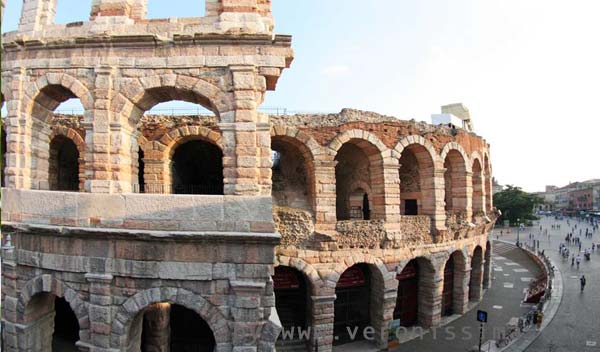
An amphitheater, a triumphal arch, two gates, a bridge, a theater, underground mosaics, paved streets, and walls. Verona is a veritable open-air archaeological museum, with exhibits ranging from the Republican to the early Christian era. Together with a tour guide, a half-day itinerary, a one-day itinerary or a multi-day itinerary will help you discover all that Roman Verona has to offer.
Oncoming Tours
August 3rd - 9:30pm
Verona by Night
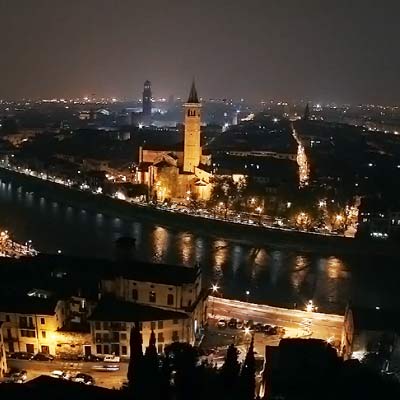
Discover the city away from the heat and crowds.
📍 Bra square
€30 per person
August 7th - 10:00am
Underground Tour
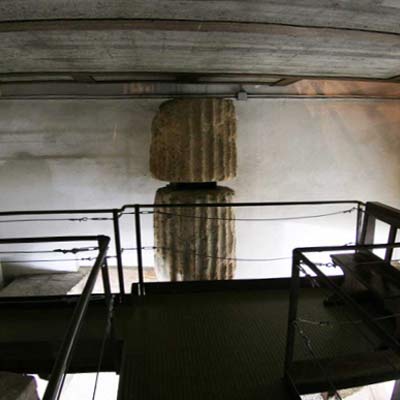
Discover the archaeological finds underneath Verona.
📍 Bra square
€30 per person
August 9th - 15:00pm
Romeo & Juliet's Tour
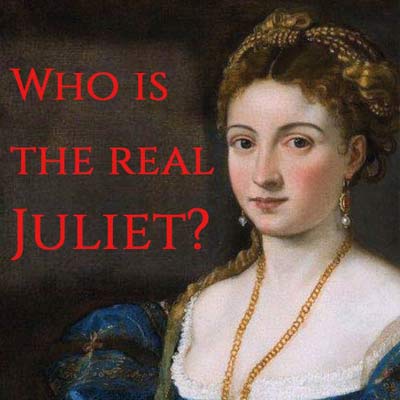
The unbelievable truth behind the famous love story.
📍 Erbe square
€30 per person
Info & Bookings:
+39 333 2199 645 info@veronissima.com P.I. 03616420232 C.F. CPPMHL74L13L781C
Itineraries in Medieval Verona
- Half day:
- Aproximately 2h30'
- All day:
- 5h with lunch break in between
The tour of medieval Verona starts at Piazza delle Erbe. It is overlooked by the Palazzo della Ragione, the ancient seat of the free municipality, the Torre dei Lamberti, a tower house that has become one of the symbols of the city's power, and the Domus Mercatorum, the seat of the guilds of arts and crafts, which were fundamental in the management of the medieval state-city.
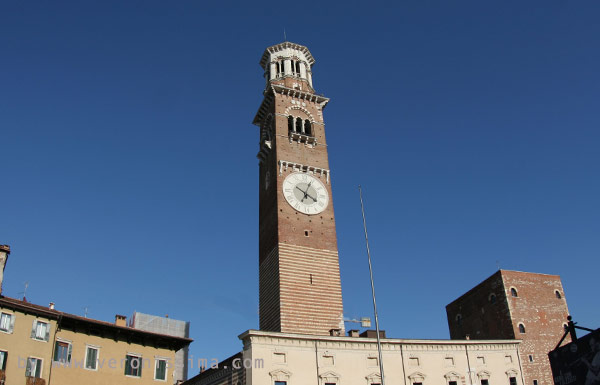
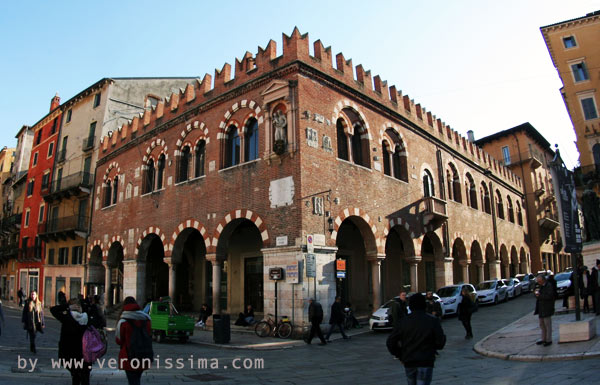
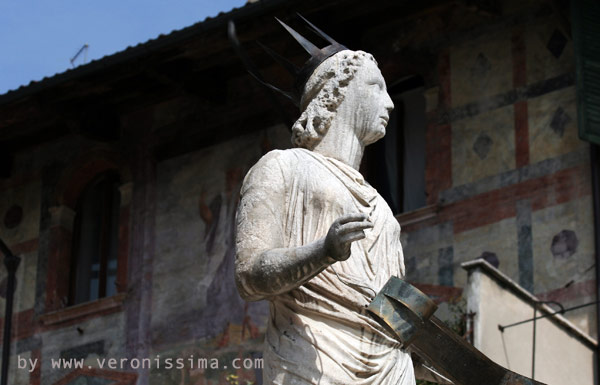
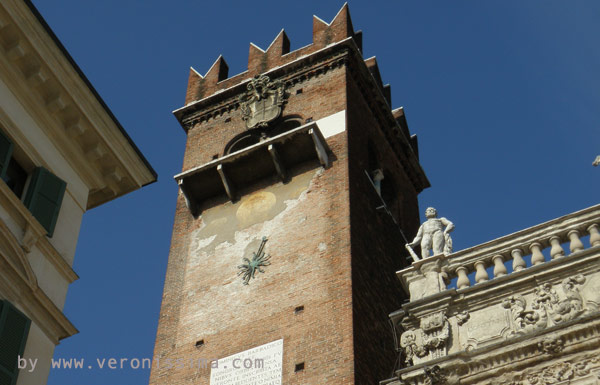
Monuments such as the Madonna Verona fountain and the Gardello Tower take us back to the height of the Scala family era. The ancient Roman forum (main square) maintained its role as a political and economic center even in the Middle Ages and became the marketplace for spices, one of the key goods in the medieval economy.
Signori Square
The tour continues in the nearby Signori square, the center of medieval political power. It is overlooked by the palazzo Scaligero, the residence of the Scala family lords, the palazzo del Capitano, the seat of military power, and palazzo della Ragione, the ancient seat of the city council and later the city court.
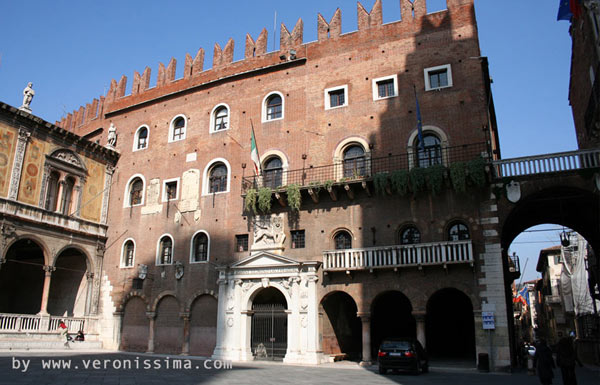
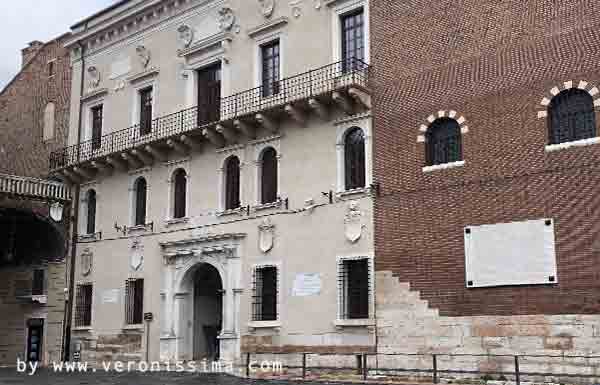
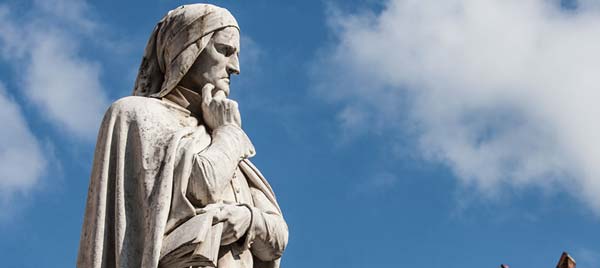
In the center of Piazza dei Signori, the Statue of Dante recalls the poet's presence for more than seven years in Verona as a guest of the Scala family. It allows to talk about places, facts and characters from the Verona in the Divine Comedy.
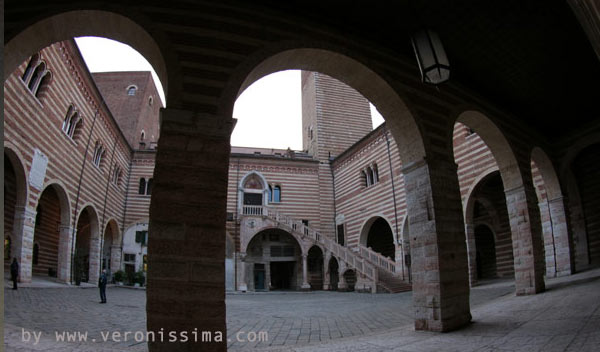
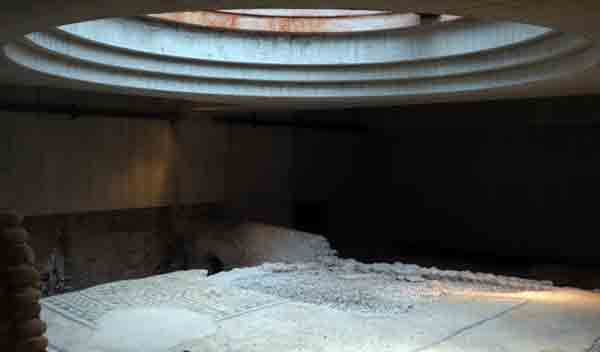
In the nearby old market courtyard, from the skylights on the pavement we will see some significant finds from the Scaligeri Underground Museum: a Lombard tomb and remains of tower-houses that show the changes in the medieval city.
If you want to know more
Scala Lords' Monumental Tombs
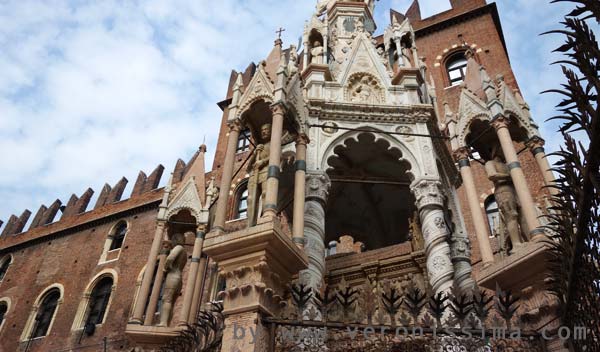
The highlights of medieval Verona are the Arche Scaligere, the monumental tombs of the Scaliger lords: Cangrande, Mastino II and Cansignorio, masterpieces of Italian Gothic art with their elaborate decoration of spires, aedicules, and sculptures. The tour guide will tell you about the dramatic biographies of the Lords of La Scala, in particular the unsolved mystery of Cangrande's poisoning.
If you want to know more
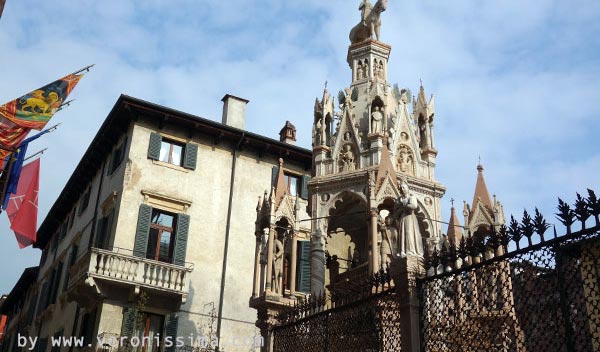
Le Arche Scaligere
FIND OUTRomeo and Juliet
Part of Verona's medieval route is dedicated to the monuments linked to the story of Romeo and Juliet. According to legend, the tragic events took place in the late 13th and early 14th centuries. In the various versions there are many historical references to the Verona of the fights between Guelphs and Ghibellines, to Bartolomeo della Scala lord of the city, to places and families that really existed. Our tour guide will show you Romeo's house, the ancient home of the Montaguess, and Juliet's house, the residence of the Capulets, with its famous balcony and romantic atmosphere.
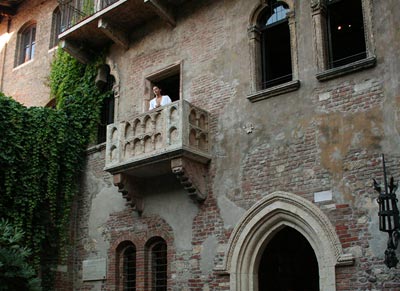
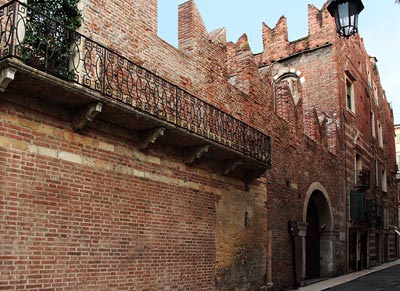
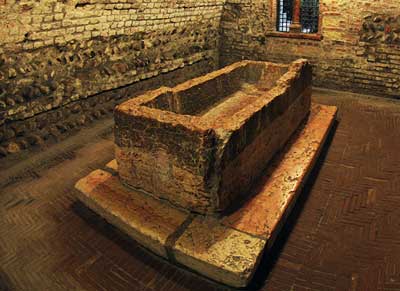
If you want to know more
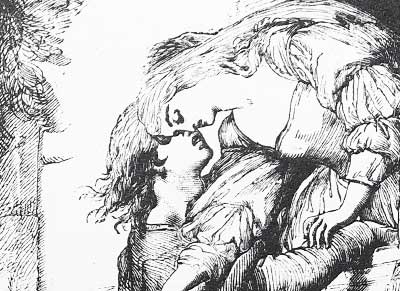
Romeo and Juliet
FIND OUTThe Cathedral Complex
The guided tour reaches the Dome Complex, the ensemble of buildings around Verona's cathedral. The Capitular Library (which can be visited by appointment) is the oldest in the world and in the Middle Ages was one of the most important cultural centers in Europe. Among the precious collections of manuscripts there is also the Veronese Indoctrination, the oldest example of written vernacular language. The cathedral is open to visitors, with the adjoining canons' cloister with its early Christian mosaics, the baptistery of San Giovanni in Fonte, Sant'Elena, where Dante expounded his Quaestio de atqua et terra.
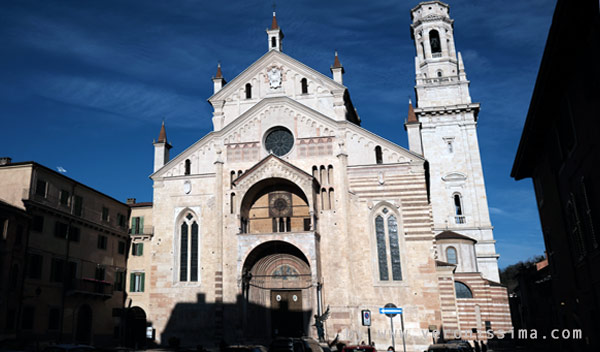
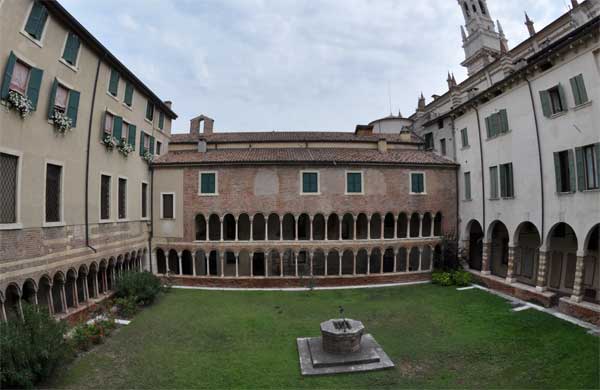
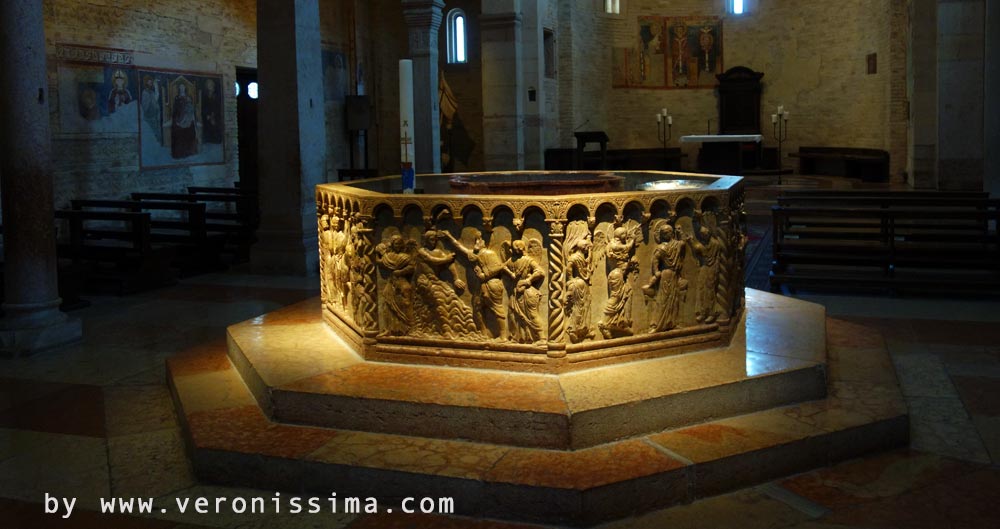
This section of the tour will explore the transition that took place in the Middle Ages from Roman polytheism to Christianity, the churches of the origins, the transformation of the language from Latin to the vernacular, the architectural evolution with the passage from Romanesque to Gothic.
Insights
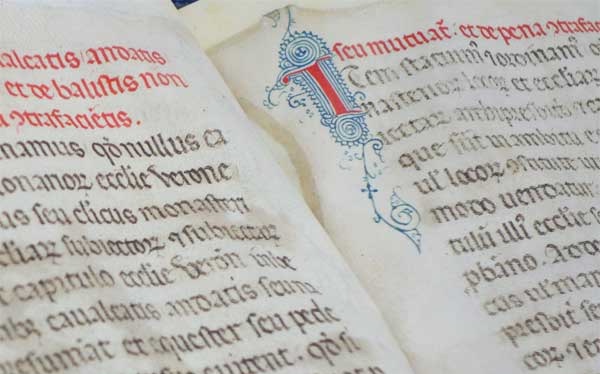
Capitolare Library
FIND OUTCastelvecchio
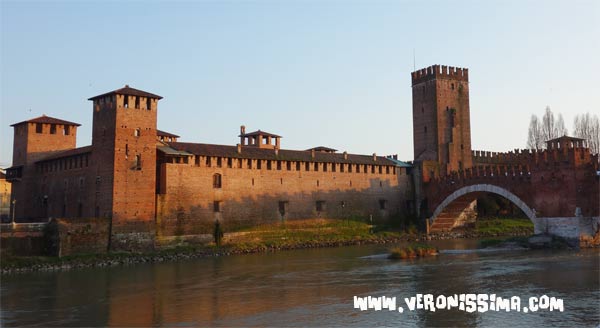
The tour of medieval Verona concludes with Castelvecchio, the manor built by the Scaligeri family in the mid-1400s. It is a typical example of a medieval fortress with towers, keep, crenellated walls, moat and drawbridges. Inside (entrance fee) there is a rich collection of sculptures, paintings and weapons from the Longobard period to the 18th century, including the important Scaliger period.
If you want to know more
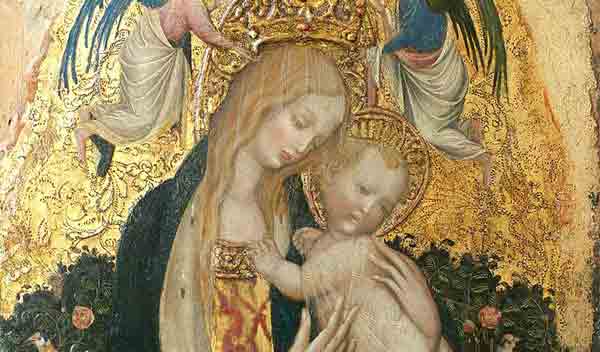
Castelvecchio Museum
FIND OUTInsights
The guided tour of medieval Verona can be integrated with visits to a number of monuments and museums. In particular, the majority of medieval art is of a sacred nature. For the deepening of the treated themes it is therefore recommended the visit to some important churches of Verona.
St. Zeno Church
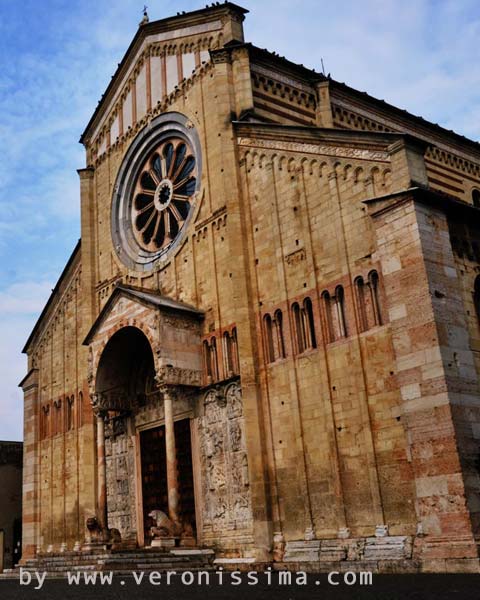
San Zeno is one of the most representative churches of the Romanesque style. The Verona tour guide will explain its main features: the hut-shaped structure, the big rose window, the prothyrum and the chancel. In the pictorial decorations, in the sculptures, in the famous bronze panels, you can admire that commingling of religiosity, superstition, popular wisdom, expressed with a simple but immediate art that characterized the medieval culture and relive some salient moments of the ancient history of the city.
St. Anastasia
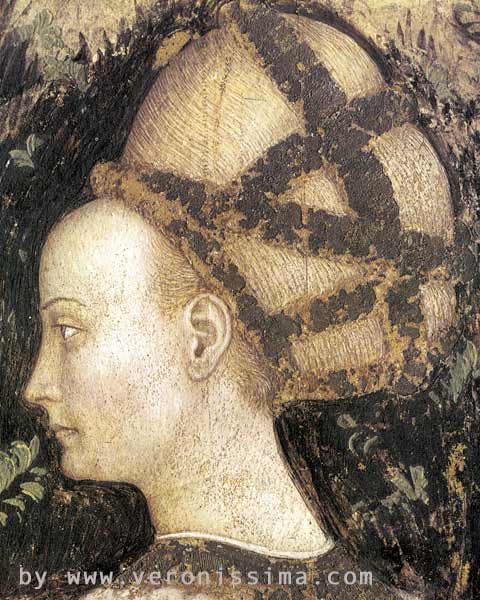
The church of Santa Anastasia was the place of worship where the medieval nobility showed off their prestige by building richly decorated chapels. Among them are the Cappella Pellegrini, with its famous Fresco of St. George and the Princess by Pisanello, the Cavalli family chapel with paintings by Altichiero, and the cenotaph of Cortesia da Serego with decoration by Michele Giambono.
St. Lorenzo and St. Teuteria & Tosca
Not far from Castelvecchio, your Verona tour guide will be able to show you two hidden treasures of medieval architecture and art: the churches of San Lorenzo, with its scalar towers and unusual women's galleries, and Sante Teuteria and Tosca, the latter one of the oldest churches in the Veneto, possibly dating back to the 6th century.
Customized Itineraries
Our guided tours can be structured as half-day or full-day tours. Tours and times can be arranged with your tour guide according to your specific interests. Your tour can be customized with optional visits.
In the outskirts
To complete a day trip to Verona, you can combine a visit to the city with a medieval itinerary in the province, which can become the destination of an exclusive itinerary in its own right. There are numerous examples of medieval architecture and art in the province of Verona that can be included in an itinerary: the early Christian hypogeum of Santa Maria in Stelle, the Romanesque churches of San Giorgio di Valpolicella, San Severo di Bardolino on the lago di Garda, or castles scattered throughout the Veronese territory, in Sirmione, in Soave, in Valeggio sul Mincio.
If you want to know more
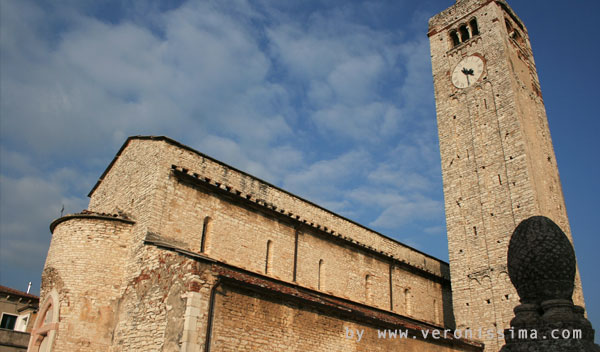
St. George in Valpolicella
VAI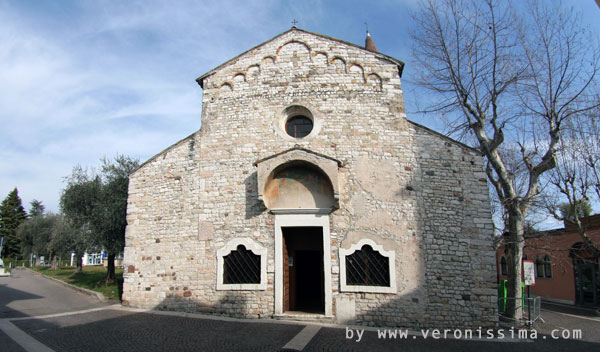
St. Severo in Bardolino
VAI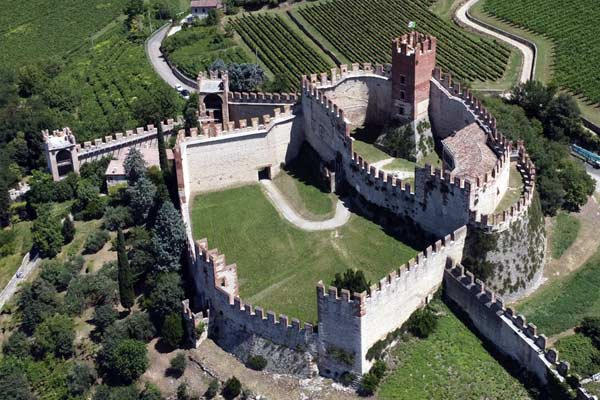
Soave Castle
FIND OUT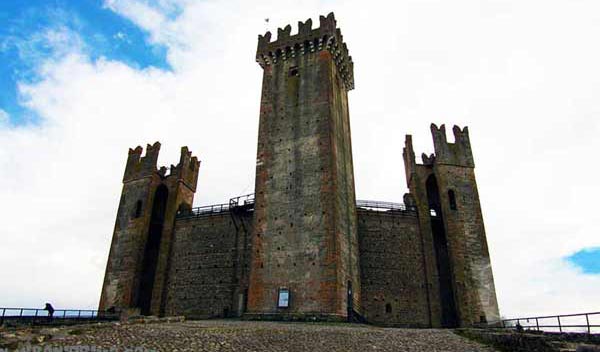
Valeggio Castle
FIND OUTInfo & Bookings:
+39 333 2199 645 info@veronissima.com P.I. 03616420232 C.F. CPPMHL74L13L781C